
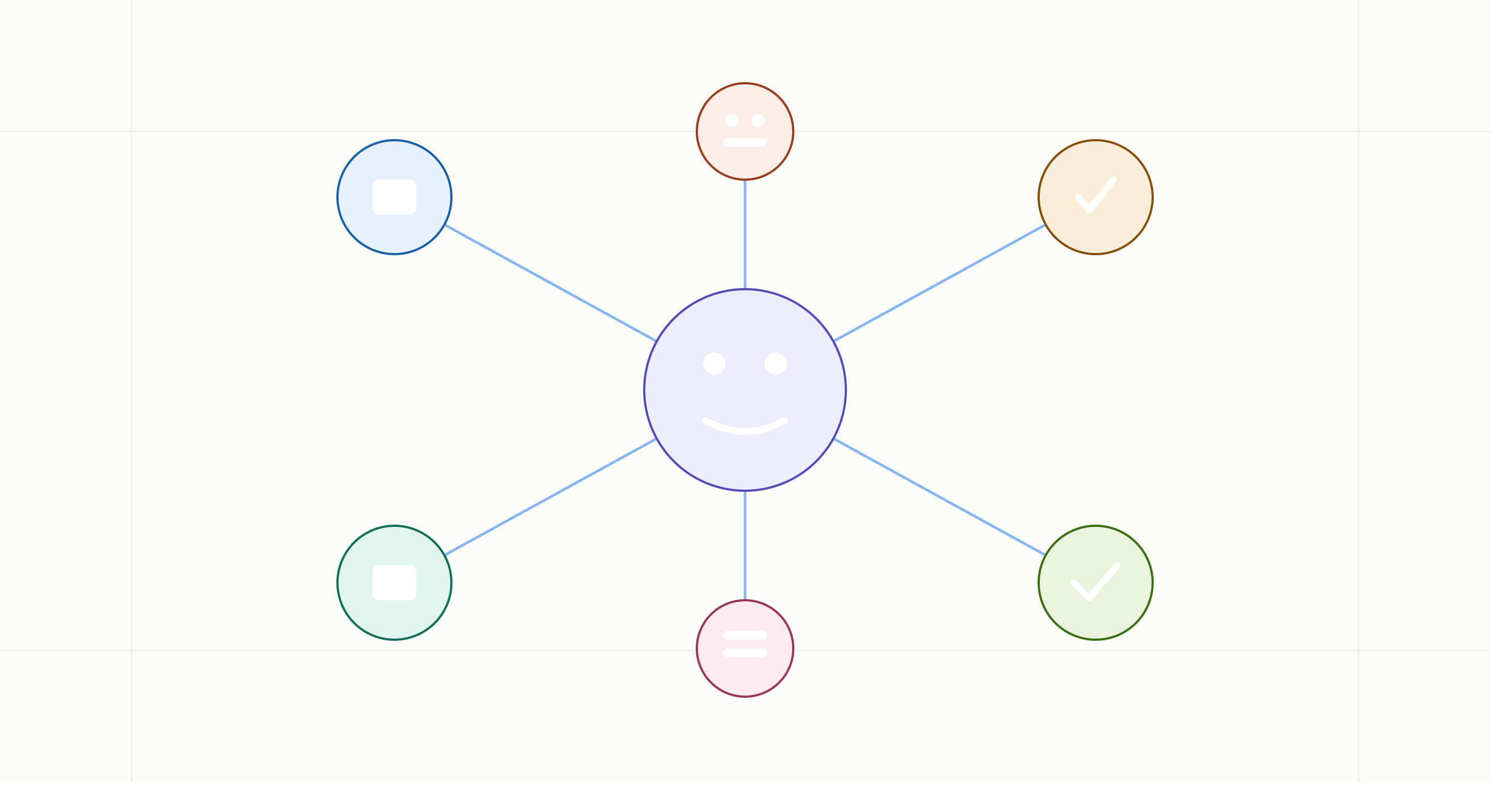
AI agents are software systems that can understand a goal, make decisions, and take multi-step actions on their own — without a human approving each individual step. Unlike a chatbot that only replies to messages, an AI agent can look up information, call other tools or APIs, complete a task, and adjust its approach if something doesn't work the first time.
For businesses, this difference matters. A chatbot can answer "What's your refund policy?" An AI agent can actually process that refund — checking the order, verifying eligibility, issuing the payment, and updating the customer, all without a human in the loop.
AI Agents vs. Chatbots vs. Traditional Automation
It's easy to lump these together, but they solve different problems:
| Traditional Automation | Chatbot | AI Agent | |
|---|---|---|---|
| Follows fixed rules | Yes | Yes | No — reasons dynamically |
| Handles unexpected input | No | Limited | Yes |
| Takes multi-step action | No | No | Yes |
| Uses external tools/APIs | Rarely | Rarely | Yes, by design |
| Learns from context mid-task | No | No | Yes |
Traditional automation (like a Zapier workflow) is great when the steps never change. AI agents are built for situations where the steps do change depending on the input — which describes most real business processes.
How Businesses Are Actually Using AI Agents
Customer support that resolves, not just responds Instead of routing every ticket to a human, an AI agent can pull order history, check policies, issue refunds or replacements, and only escalate the genuinely complex cases.
Internal operations and data entry Agents can read incoming documents (invoices, applications, forms), extract the relevant data, validate it against existing records, and push it into your ERP or CRM — a task that usually eats hours of manual work every week.
Sales and lead qualification An agent can review inbound leads, cross-reference company data, score them against your ideal customer profile, and draft a personalized first response — before a rep even opens the lead.
Workflow orchestration across tools Many businesses run on 5-10 disconnected tools. AI agents can sit between them — watching for triggers in one system and executing actions in another — closing gaps that used to require manual handoffs.
What It Takes to Build an AI Agent That Actually Works
A lot of "AI agent" projects fail not because the model isn't smart enough, but because of three practical gaps:
- Unclear scope — agents work best on well-defined tasks with clear success criteria, not vague goals like “automate customer service”
- No access to real data — an agent is only as useful as the systems it can actually query and act on (your CRM, database, internal APIs)
- No fallback plan — production-ready agents need clear rules for when to hand off to a human, not just when to act
This is usually where the gap is between a demo and something a business can actually rely on day to day.
Is Your Business Ready for an AI Agent?
A good starting signal: look for a process that is repetitive, rule-based most of the time, but occasionally needs judgment calls. That's the sweet spot — fully manual processes don't need AI, and fully deterministic ones are better served by simple automation.
If you're not sure where to start, the most common entry points we see are customer support triage, internal data processing, and lead qualification — all of which typically show measurable time savings within the first few weeks of deployment.